*Note    this a reproduction of a 1986 book celebrating the Overbrook Centennial


OVERBROOK CENTENNIAL

1886-1986


CENTENNIAL PAGEANT AND CELEBRATION

AUGUST 15, 16 and 23, 1986

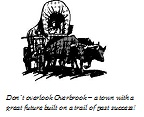
“DON’T OVERLOOK OVERBROOK


OVERBROOK CENTENNIAL

1886-1986


GENERAL COMMITTEE: Carla Hazen, Joanne Allen, Ruby Wadsworth


The Centennial Committee planned events for a celebration that took place on August 15, 16 and 23.  Among the events were a Centennial Pageant, Crowning of King and Queen, Historical Museum, Heritage Arts Display, Arts and Crafts Fair, and fun and games.


Main Street 1904


East Side of Main Street 1913


OVERBROOK

“A CENTURY OF GOOD LIVING”


Written and narrated by Lois Ruble


General Chairman: Fidelis Club


Musical Committee

                                                Reta Hamman                                                   Robert Benortham

                                                Mary Gates                                                      Lucy Benortham

                                                Carol Fischer                                                    Mary Elliott


Style Show Committee

                                                Allene Hesseltine                                              Jeanne McDowell

                                                Dorothy Lee                                                     Barbara Eisenbach


Ice Cream Social Committee

                                                Marilyn Land                                                    Pauline Supple

Dorothy Schwanke


            This book has come about as a by-product of the Centennial Celebration.  After the program was over, many people asked that a book be compiled to preserve the history that had become a part of the Centennial Pageant.  It is our hope that this book may serve as a nostalgic reminder to those whose roots are here.  To those who in later years adopted Overbrook as their hometown, may you find this book to be informative and inspiring.                                                                                                                                                              

                                                                        Centennial Book Committee:

                                                                                                Lois Ruble

                                                                                                Claudine Norton

                                                                                                Opal Coffman


OVERBROOK CENTENNIAL – 1986

            Tonight we come in a festive mood because we are here to observe the one hundredth birthday of our beloved hometown – Overbrook.  Perhaps a hundred miles away Overbrook would not be a familiar name, but to those who live here, and especially to those who were born and raised here, the word “Overbrook” is synonymous with “my home town”!

            Most any town had at its beginning a church, and of course this is true of our town.  But the first church here goes back 25 years before the town.  It goes back to a little settlement northwest of Overbrook, a place called Ridgeway.  It was there in 1860 that a Rev. Jared W. Fox came to live and in 1862 formed the Congregational Church.  It would be our guess that that church, like most churches of that era, was served by circuit pastors- those who were passing through.  Well, glory be, here’s Pastor Friesen to lead us in some hymns.


(Stan Friesen appears on stage and says a few words and leads the congregation in the singing of “Amazing Grace”.)


            Now let’s get back to our roots and old Ridgeway.  Ridgeway was a little settlement to the north and west of the present site of Overbrook.  Ridgeway’s purpose was to provide a cut-off trail to connect the Santa Fe Trail with Lawrence.  Aaron and John Kinney plowed a furrow from Ridgeway through Twin Mound to Clinton, and from Ridgeway going south to 110 Mile Crossing.  Wagon trains began to use the crossings and later they became stage lines and much traveled roads.


(Models come on stage modeling the clothes of the 1880’s and 1890’s)

Jane Hylton and granddaughter Christina Badger


Debbie and Rebekah Friesen


Among the early settlers coming to this community was H.H. Heberling who came from Harrison County, Ohio, and in the spring of 1855 settled 1-1/2 miles northwest of Overbrook in what was then Douglas County, later Shawnee County and now Osage County.  About that same time the Kinney boys came from Illinois and settled at Old Ridgeway.  The year of 1856 brought more settlers – among them William Atchison and family from Ohio, Joseph Law from Pennsylvania, Robert and Morris Clark from South Carolina, Alfred Wiley from Ohio, Hiram Riley from Missouri, and also a man named Jamison who settled on a farm later owned by the Bryson boys.  The Jamison man started a saloon and trading post on the Santa Fe Trail.

By the spring of 1886 things were progressing west of town, too.  Railroad graders were working on the Alvin Miller, Charles Reed and Will Banta farms.  There was a tent town west of the Banta farm where the workers lived and kept their mules, horses and equipment.  They used Old Flag Springs on the Miller farm as their source of water.

We don’t know much about public entertainment in this era, but if there was entertainment you can imagine that this oldie would have been among the Top Ten.


            Among the firsts in any community were the churches and the schools.  The first school in the locality was in 1862 at Ridgeway and was taught by Miss Rebekah Heberling.  Later a school was held west of town, but the first school in Overbrook was built in the fall of 1890 and stood on the site of our present Grade School.  It opened for students in January 1891 and was taught by J.A. Kesler who later became a banker here.  Mr. Kesler had 100 students in eight grades that first year with an average attendance of over 90.  Surely all this must remind you of another oldie of the day.


            One prime subject that we must not miss in the history of Overbrook is the story of the Hill or Simmons Point.  This is a high point five miles east of Overbrook, where an old rock house stands just to the south of the tower owned by the American Telephone and Telegraph Company.  It was on this spot that the stagecoaches drew up and halted to rest and change teams.  It was to this location in 1855 that Peter Dodder and three friends came into Kansas and were cited as the first white men to stake their claims at LaPeer, Kansas in Douglas County.  Peter Dodder built his first home, a shanty on what had probably been an old Indian trail.  It is believed that this point was a lookout point for the Indians.  Pioneers moving westward learned to know the Point as the Butterfield Stage Stop.  Peter Dodder, with his daughter Elmira at his side, made an eatery in the shanty of the house.  Mainly they served coffee and flapjacks to the immigrant people who were passing through at the time.  Later this land was passed to Phillip Simmons, Dodder’s son-in-law, who had married Elmira Dodder.


I’m wondering what kind of music these immigrants might have enjoyed.  Whatever music they had, they made it themselves.  In this bit of reverie, let us listen to the Bona Fide Blends quartette.


(Bona Fide Blends, a Barbershop Quartette sings.)


            Perhaps now we have had enough background.  Just how did Overbrook get to be Overbrook?  It seems that the land on which Overbrook started was originally owned by two farmers.  Exactly in the center of Elk Township ran a much traveled road, north and south.  The west side of the road was planted to corn and owned by J. B. Fairchild; on the east side of the road wheat was planted and this field was owned by W.T. Coffman.  The summer before these two land owners had given right-of-way to the K.N.D. Railroad, later known as the Missouri Pacific.  I learned that K.N.D. stood for Kansas, Nebraska, and Dakota.  It was called by some Crooked, Narrow and Dangerous.


            Quite an interesting story has come down through the years regarding the naming of the City of Overbrook, and I pass it on to you …


One day in May of 1886, Mr. Coffman and Mr. Fairchild were visiting over the fence and feeling rather jubilant over their crop prospects.  Mr. Coffman said, “Jap, could you guess what happened at our house last night?  We had a little boy born to us.  We’re going to call him Joe”.

            “Well, that’s great, Bill.  So you’re going to call him Joe?  Say, Bill, this calls for a little celebrating.  Look what I’ve got here in my pocket.  You know, Bill, I’ve been thinking lately, and last night I put my idea on paper.  Now, since we’re going to have a railroad, right here on this ridge where we are standing would make a fine place to locate a town.  I could lay out 25 or 30 acres mostly north of the railroad and you could lay out about the same acreage.  We could have it platted and start selling lots.  What think you?”

            “Let me take your drawing and study it a few days.  You may have something there, Jap”.


            “Sure, Bill, and talk it over with Joe.”  As Jap walked off he was amused.  “Maybe twins were born today”.

            About ten days later the two men met near the intersection of the highway and the new railroad.  Both men were agreed and enthusiastic to get the new town started.  “Well, Jap, I told Joe all about our plan for a new town and I couldn’t understand a word he said, but I think he wants to call our new town ‘Sunflower City’.  Quite appropriate, don’t you think?”

            “Not a bad idea, Bill, but why not call it Jasper City?  That sounds more like my namesake”.  As they were discussing a possible name, one of the railroad officials overheard their discussion and joined in.  “Since you are not agreed on a name for your new town, why don’t you name it after my home town back in Pennsylvania – ‘Overbrook’?”

            “Well, Jap, that sounds good to me.  What do you say?”

            “Bill, you know we don’t always agree, but go home and tell Joe it’s ‘Overbrook’.”


1900 -1910


The first decade of this century was a growing time in Overbrook.  The efforts of the forefathers really began to bear fruit.  Several businesses were taking their places along Main Street.

This was a time of beginnings in Overbrook.  When things were hard the people buckled down and they did the job.  Then when they had overcome the hurdle, they threw a party.  There were literary societies, or chatauquas, that came through the country, but mostly the entertainment was of the hometown variety.  Even the churches were not always straight-laced – they might sing comic numbers during a party.


            It was in 1901 that the Thimble Club was formed.  Mrs. D.S. Fairchild was the first president.  It was primarily to be a fancywork club, but they did plan and carry out elaborate parties on nearly every holiday.  The article I read said “They had jolly Halloween parties every year”.  And later I read “their New Year’s reception was said to be a ‘very swell affair’.  The McBride Orchestra furnished music – we finished up with the Virginia Reel”.

            This must have been a very nice time to live in Overbrook.  Many of the lovely old homes that grace our streets today were built during this time.  As we think of the beautiful lattice work on the porches and the curly-cues on the woodwork – now use your imagination – doesn’t that set the stage for the wedding dresses that have helped us remember those very special occasions throughout the years?


Amber Coffman sings “I Love You Truly” as wedding dresses are modeled.


            But don’t let us get carried away – it was not all beauty and elegance back then.  It was not easy to farm on the virgin prairie.  Wouldn’t those old timers be shocked if they could see the machinery we have today?  But to them you had two ways to build a fence – the most common way was to dig a furrow and throw in some hedge-balls.  (I understand the first hedge-balls were brought here from Oklahoma).  We still see the hedge rows today that were planted by our ancestors.  This served as a windbreak as well as a fence.  The second method was to lay up a rock fence.  One family told me that they hired a professional rock layer and paid him $20 a month plus room and board.


            Don’t you suppose that after a six-day week of this kind of work you’d be ready for a hoedown or a square dance on a Saturday night?


(Kuntry Kuzzins Square Dance Group demonstration on stage, accompanied by Santa Fe Trail Pickers)


            Earlier I mentioned about schools.  Most of you remember the old country schools that dotted our hillsides until the 1950’s.  A very unusual event took place at the old Pancake School that doubled as a church.

            One hot Sunday morning in August of 1907, the Old Order Brethren were assembling for a church service.  On attempting to enter they were met with such an offensive effluvium that the men started an investigation.  One of the old brethren diagnosed it right – it was the smell of a human body.

            On entering the attic they found a man hanged to a rafter.  The body was in such a state of putrefaction it was scooped on to a blanket and buried in the potter’s field in the Overbrook Cemetery. 

            They burned the schoolhouse and built a new one.  No one was ever able to identify the man or reason of his death.


1910 – 1920


            It was in 1911 that “DON’T OVERLOOK OVERBROOK” was coined as the town’s slogan.  That slogan was submitted by Lewis Coffman in a contest by the Chamber of Commerce, (Notification letter re-created below)


E.S. Shoecraft                                    


THE SHOECRAFT HARDWARE COMPANY

            “The Store of Good Service”

                OVERBROOK, KANSAS                                                              November 17th, 1911.


Mr. Louis Coffman,


                Overbrook, Kansas.


Dear Sir;-


                I am pleased to notify you that your slogan “Don’t Overlook Overbrook” was unanimously accepted by


the Overbrook Commercial Club as the slogan for Overbrook and I herewith hand you check on the First


National Bank for $5.00.


                Thanking you for the part you have taken in the matter


                                                                                I am yours Very Truly,


                                                                                                signed by E.S. Shoecraft


                                                                                Secretary Overbrook Commercial Club


ESS/BC


            The years of the teens brought many changes to our country and to Overbrook as well.  The music and the clothes they were a changin’!  If you were fortunate enough to be able to swim, you could go to the beach in this rather conservative attire.


            It was during this time that the town well was dug and the pump set in place in the center of Overbrook’s main street.  There was a trough built where farmers would come to water their horses, and over the pump a white bandstand was erected.  There was a city band that would play in the bandstand which was also used for many special events.  It was the point where town folk gathered for special times.


            But life in Overbrook was not always quiet and serene.  Robberies seemed to plague the businesses.  Some thought that the robbers were from Kansas City – that they came from the big city knowing there was little police protection in the small towns.  On March 13, 1917, the First National Bank was robbed.  The safe was blasted open with dynamite about 2 o’clock in the morning.  Miller Burris, who lived nearby, heard the blast and figured what was happening.  He grabbed his pants and ran out into the street to warn the town folk of what was taking place.


(Dr. Bruce Cole portrayed Mr. Burris warning the town)


            Many of you are remembering the teens in another way.  This was not a pleasant decade over all.  It was during this time that the war was mounting in Europe.  We sent our young men and later our not-so-young men to fight on foreign soil.  People made sacrifices at home too.  They were asked to eat cornbread once a week because of the shortage of wheat.  Every woman was to knit a sweater for a soldier.  But none of this was important when compared to the young men whose lives were being risked in the defense of their country.  Two young men from our community did surrender their lives in this war – Ralph P. Anderson and Joseph R. Raible were killed in action.  It was in their honor that Anderson-Raible American Legion Post was named.  These young men went into the Army at the same time – on September 19, 1917.  Raible was killed in action on September 14, 1918, and Anderson was killed the very next day, on September 15, 1918 – both at the same place, St. Mihiel, France.


            One of the most exciting and most tragic events of this era happened on January 8, 1918.  About 1 o’clock in the morning, H.W. McCartney called Mae Craig, the night telephone operator, and asked her to alarm the town as he thought someone was robbing some of the stores or the banks.  He dressed quickly and took his 22-rifle to come downtown to see what could be done.  As he was crossing the street between the Kansas State Bank and G.M. Hart’s General Store, he fired his rifle (most people thought into the air).  A man stepped out of the Hart doorway and fired at him.  The bullet passed through his right lung and dropped to the ground where it was found the next morning.  Mr. McCartney turned and struggled to the porch of his home and fell.  His wife helped him into the house where he fell again and breathed his last.  After the shooting the robber rushed to an automobile and headed south – the robbery was never solved.  Mr. McCartney was a man who had been educated for the ministry in the Presbyterian Church, but he was teaching in the Overbrook schools at the time of the shooting.


            The influenza epidemic of 1918 is being remembered by many of you, I am sure.  Hardly a family in Overbrook escaped this epidemic and one young woman in Overbrook died from the influenza.


            In 1919 the schoolhouse burned.  This was a large two-story structure that housed both the grade school and the high school, and sat on the site of the present grade school.  Nothing was saved.  For a time after that the kids went to school in the churches, the Grange Hall, Masonic Hall or anyplace where room could be secured.  Later on, when the school was replaced, the grade school was built at the old site and the high school at the site of the present Middle School.


1920 – 1930


            The twenties came in pointing us to a new era in our history.  The war was over – life was to return to normal.  But nothing of the twenties was like it had been in pre-war days.  Life was escalating, people were tasting life with a little more money.  Yes, we were in the Roaring Twenties.  Life was daring, the hemlines were coming up, new clothes and new kinds of entertainment were here to stay.  Few songs of the Charleston Era have captured this wacky, high-spirited, devil-may-care flavor as perfectly as this delightful ditty.


            Yes, the twenties brought an end to much of the old and launched us into new and different endeavors.  Silent movies ended and talkies began.  It was at this time that Frank Karnes and Ward Spielman put together a radio.  People couldn’t believe that what they were doing would even be possible.  A great treat would be to go up to the Spielman home and listen to this new radio.  There was only one station in Kansas City that was broadcasting; you had to listen between 11PM and Midnight, the only time the station broadcast.  And you’d sit with the earphones on your head and listen intently to the scratchy phonograph music coming out over the sound waves.


            In 1933 the Kansas State Bank was robbed.  Mr. And Mrs. J.A. Kesler and Ruth Marie were taken hostage in their home, taken down to the bank at gunpoint in the middle of the night where the robbery took place, then driven several miles into the country southeast of Overbrook where they were put out of the car and left to their own resources to get back to town.  Claudine Norton came within an eyelash of being one of the hostages also as Ruth Marie had asked her to spend the night, but plans were changed at the eleventh hour.


            During these early years there were people of great stature who were continuing to care for our town.  Business was good; people worked long and hard and they worked together.  The town flourished – probably this was the greatest period of business growth in our history.  So many have told me about the people they knew who were staunch businessmen and were of such a great influence in this community. Of course, the names that I will be reading would not all fit into the twenties era.  Very likely some would span several decades.  As I name them, I am aware that I risk leaving unnamed some very special people.  So as we spend these next moments as a tribute to those who have worked so hard and given so much of themselves to this community, please add the names that come to your mind of others who deserve our mention:  J.A. CORDTS of the First National Bank; J.A. KESLER of the Kansas State Bank, G.M. HART, A.M. HART,G.P. HART, GEORGE W. MILLER, General Merchandise; ELMER TYNER, FREEL PERRYMAN, J.L. LONG, Hardware; GEORGE O’BRYHIM, ADAM ECKART, Grocers; ZEKE ERNST, ROY BAKER, Furniture and Undertaking; A. E. TOPPING, W.E. TOPPING,LUCILE TOPPING, Druggists; the MILLERS, Ford Agency; JESSE HOOVER in the Barber Shop; the HEBERLING BOYS who did Cement and Plaster work; DON HOYT, Implement Dealer; DOC HAMPSHIRE and DOC HOOVER and DOC McCLINTOCK; EARL COLLINS, JOHN COLLINS who ran the Hotel; RENA FISHBURN, WALT RUNDLE at the Farmers Union; DEL HERLAN, Drayman; BART DONEY, Blacksmith; the DOC MAICHELS, Veterinarians; RADCLIFFS AND COFFMANS, Farmers and Stockmen; HARVE HAAS, ERVIE HASS, Machine Shop, HARLAN BAKER, Telephone System; H.L. SMITH, Shoe Shop.


            Shall we pray as we remember these people – “We thank you God for these men, and the women too, and others unnamed who cared enough to work hard, to persevere, so that others who followed them might be able to enjoy a quality of life in this good town.  We remember, Lord, and we give thanks.  Amen”.


            Then there were those who were not business people, but who added flavor to life in our town.  Sometimes they might be called the jokers – the ones who enjoyed playing practical jokes on someone else.  Then there were still others whom we might call the jokees, the ones who were the butt of practical jokes.


            One story told to me was of a man who just couldn’t take a teasing.  So, as you might guess, the young boys would get together and figure out just what they could do to light his fuse.  They could tell when their subject was about to explode, so at that point they would hightail it around the corner of a building to hide.  But, those kids always contended that their victim could throw a rock around a corner.


            Another story that came to me was of a young couple who drove their buggy to town to shop on Saturday night.  The baby was asleep in the back of the buggy so the couple left the sleeping child in the buggy while they went in to do their shopping.  A couple of guys in a slightly “inebriated condition” were watching from across the street.  They decided to play a good joke.  They moved the team, buggy, baby and all to the other end of main street – then came back to wait and watch for the young couple.  Can’t you imagine the frantic plight the young couple felt when they came out of the store with their week’s supply of groceries, only to find no trace of buggy or baby – and the convulsive laughter of the two culprits watching from across the street!


            Well, the Twenties ended, but not as they had begun.  For they had started as an upbeat decade – prosperity was the key – and then came the CRASH of 1929!  What does this mean?


            It means that the years of the Thirties are going to be among the hardest years this country has ever known.  People who had had money in the Twenties lost it all in the Crash.  The Thirties found people with little financial resources, and a good many without jobs.  I’ve been told that there were 18 banks in Osage County before the Crash.  After the Depression only three were still in business – two of those in Overbrook.


            Government plans began to try to alleviate the problems – the CCC, the WPA.  Hoover had campaigned with the slogan “Two chickens in every pot and a car in every garage.”  Then Frank Roosevelt came with the New Deal.  To compound the problem we had two of the hottest, driest years in our history.  In the summer of 1936 we had more than 80 days with a temperature above 100 degrees.  Grasshoppers move in, hunting for a spear of something green.  When the corn dried in the fields, local farmers tried to put it up for silage, but the grasshoppers had left nothing but the bare stalks.  One farmer said when he tried to tie a bundle of corn it was like tying up broom handles.  When there was nothing for the cattle to eat, they were sold – sometimes for as little as two cents a pound.  But the music of this era was mostly upbeat.  Songwriters felt it was their duty to cheer up America.  Popular songs were “Happy Days Are Here Again” and “Let’s Have Another Cup of Coffee”.  But this one song was more realistic and became the anthem of the Depression…


(“Brother Can You Spare A Dime” by James L. Ruble III)


The thing that has been amazing to me as I have talked with people is their attitude about the hard times of the Thirties.  Because of the intense dust storms this period became known as “The Dirty Thirties”.  But the attitude of the people was “We were all in it together.  We didn’t have anything, but neither did anyone else”.  The people worked together, suffered together, and, yes, probably dreamed together of a better day.  Their music was happy music in spite of the times.


(Violin Medley by Mary Elliott)


            Prices hit rock bottom during this time – no one had money to spend.  Farmers bought chicken feed in printed sacks and the women used the sacks to make colorful dresses, aprons, and even curtains.  The Variety Store advertised peanuts for 14 cents a pound.  G.P. Hart advertised bath towels for 25 to 50 cents, two pounds of raisins for 15 cents, and peanut brittle or orange slices ten cents a pound.  A continued story, a novel, ran each week in the Citizen.  One that ran for many weeks was “The Gift Wife” and also “The Dim Lantern”.  The Rialto Theatre in Lyndon advertised that Ronald Reagan and Ann Sheridan and the Dead End Kids are appearing in “The Angels Wash Their Faces” –admission 10 and 15 cents.

            As hard as times were in the Thirties, this is still Kansas and this is still home.  Let’s all sing - -


(“Home On The Range” … Entire audience led by Mary Elliott)


            Fun songs were popular in the Thirties – Shirley Temple was everybody’s idol.


1940 – 1950


            The Forties come in on a note of rebuilding.  Dwight Payton is editor of the Citizen, Floyd Butel is doing the weekly weather reports, Russell Baker is named Master Farmer by the Kansas Farmer Mail and Breeze, Lloyd Perryman is selling insurance – “He is not a stranger”.  The farm situation has improved with the horrible drought and grasshopper years behind us.  Our President, Franklin Delano Roosevelt, has been with us a long time, soon to be elected for an unprecedented fourth term.  FDR was a great orator, and when things were tough he calmed us down with a “Fireside Chat”.


            Things seemed to be peaceful and serene on the homefront, but it’s plain to see that war clouds are gathering over Europe again.  Many of us remember December 7, 1941 when Japan bombed Pearl Harbor- and we were at war again.


            The draft is formed, and Uncle Sam calls our young men once again to fight on foreign shores.  Women go to work in defense plants.  In a Citizen from 1942 I read where four young from Overbrook are going to Leavenworth for their final examinations for the draft – they are Delbert Harris, Marlin Reed, Alfred Herlan and Kenneth Jones.


            There were birthday clubs, adoption clubs.  Every serviceman was special and to be remembered.  Sugar is rationed, as is gasoline.  Scrap metal drives seem to be the object of a really big push.  The slogans were interesting, to say the least:

            “Help Protect Our Boys.  If we can’t send them guns the enemy will send us caskets”;   “Sell a Ton and Save a Son”; “Bomb ‘em With Junk”; etc


            Every effort seemed as if we were as one.  Never in all the newspapers that I read did I ever see any indication of even one person who wasn’t in agreement that we should be there.

            We waited for our boys to come home.  We sang sentimental songs – “Don’t Sit Under the Apple Tree With Anyone Else But Me”, “Til I Come Marching Home” – and such nonsense songs as “Three Little Fiddies” and “Marsie Doats and Dosie Doats”.  But in the state to our south was emerging a really big musical that was to be the hit of the age.  Let’s listen now to some of the music from “Oklahoma” …

(“Oklahoma” Medley – Girl’s Trio: Beth Sisson, Debbie Rose, Marcia Atchison)


            In 1945 the war was over.  We praised God, but we knew it would be months, maybe years, before all of our boys would come marching home.  Overbrook incorporated in 1948 – Carl Coffman is the first mayor.  The war is over – we can laugh at ourselves – we can even poke fun at the enemy!  (David Holzhuter yodels “An Austria Goes Yodeling”)


1950 - 1960


            The Forties pass and we are in the Fifties and Overbrook is progressing.  The women have worked on improving the town.  The Betterment Committee is formed.  The women have projects for improvement and they enter a contest sponsored by the General Foundation of Women’s Clubs.  They win first in the State and third in the Nation.  Overbrook was not any lazy dying town.  A corporation was formed – Fred Reed was the chairman.  In 1954 Dr. James Ruble came to Overbrook.  Three years later Overbrook was featured on CBS’s Wide, Wide World program.  This was a Sunday afternoon television show that was similar in format to “60 Minutes”.  Dr. Hoover came back from Quinter as the old country doctor, and Dr. Ruble was the young one.  Rehearsals with townspeople and the doctors went on for a week as Overbrook put her best foot forward for her national debut.  When it was all over we were glad to go back to being a quiet little town in Eastern Kansas.


            Overbrook experienced much growth in the Fifties.  Forbes Air Base and the Supply Depot in South Topeka brought many new families to Overbrook.  The Grade School added four new classrooms and a multi-purpose room.  Let’s listen now to some of the music of the Fifties…

            (“Greased Lightning” – a modern dance by Erica Seyler)

            (“Que Sera Sera” – a vocal number by Karen Hoffsommer)


1960 – 1970


            1961 was a banner year for Overbrook.  This year’s basketball team boasts 16 straight victories.  Robert Knight is the coach.  Senior starters are John Rose, Duane Supple, Ron Anderson, Don Duncan and Leonard Heffner.  The team glides through regular season games and regional and state tournaments until a seven-second timekeeper’s error costs them the final game and the state championship.  Never was school and community spirit higher than during this time when they were cheering the team on to victory.  What a perfect time to sing Overbrook High’s school song.  We just happen to have one of the cheerleaders of the Sixties with us to lead us …


            Also in 1961 was the big Santa Fe Trail Centennial.  Don Hoyt and his committee provided many Centennial activities.  A caravan of persons representing people from a hundred years before left Westport and traveled to New Mexico helping all the towns along the way to celebrate 100 years on the Santa Fe Trail.  Howard Long and Roy Baker of Overbrook traveled with the caravan portraying the horse and buggy doctor.  On our big day, 3000 people were in Overbrook to celebrate the 100th anniversary.  It was Overbrook’s biggest day in history.  It was a day with great expectations.


(“Impossible Dream” by Jon Wilhite)


            Another big thing in 1961 was the opening of the Nina Schlink Memorial Swimming Pool.  The kids of the town thought they’d never had it so good!  Let’s hear some of the kids from this era sing a fun song from the Sixties …


            Before I go further I’d like to make a word of explanation about our styles as you have seen them modeled here tonight.  Our original intent was to describe each costume as they appeared on stage – there would be just a few to describe.  We were overwhelmed and overjoyed when the attics opened across this community and we had a huge array of styles from across the years.  Because of the time element we couldn’t tell about each one – but hasn’t it been an exciting revue of styles of the century?  Thank you for modeling and thank you for the clothing you have provided.


1970 – 1986


            Well, well, here we are to the Seventies and we’ll soon have covered a hundred years.  We’ll combine the five and one-half years of the Eighties in this one last segment of our history.  How will the Seventies and the Eighties be recorded in the annals of our time?  Sometimes when you stand too close to something you don’t get a good perspective.  Perhaps that’s where we are right now, but we’ll try.  No matter what era – we can have time for love.  Listen to this ballad …

(Love Ballad “The Rose” by Karen Hoffsommer while styles of the 1970’s were modeled)


            Back in the late Sixties Overbrook became a part of Unified School District, Santa Fe Trail District No. 434.  Now our youth attend high school at a new building five miles west of Overbrook.  It was a hard decision and a hard transition.  Growing pains never come easy.  Our youth across the land assert themselves.  Sometimes we are red-faced over what our youngsters do, and sometimes we are red-faced over what some of our oldsters do, too!


(“Flasher” Carl Maichel streaks through the crowd.)


            The economy is bad – our farmers are suffering.  Oh, we’ve not had the droughts or dust storms of the Thirties, but we’ve had years so wet we couldn’t harvest the crops, and we’ve had hail storms and wind storms.  And some years we’ve had such bumper crops that the price was way down and we couldn’t meet expenses.  A Recession is what the big boys in Washington have called it.  But, we’ll be all right.  We’ll weather the storms and we’ll come out on top, just like we did in the Thirties.  We are a hearty people – let’s keep our music upbeat.  We’ll not sing the blues…


(“I’d Like to Teach The World To Sing” – Christian Church kids)

No picture available.


            Last year our own baseball team, the Kansas City Royals, brought us a world championship.  Let’s all sing …


(“Take Me Out To The Ball Game” – Audience sings. Kids of the 80’s – Jeans were the style)


            As we close this Century of Good Living in Overbrook, let us praise God for His goodness to us.  We’re proud to be Overbrookians.  We’re proud to Be Kansans.  And we’re proud to be Americans.  Let us stand as Mary Gates, Overbrook’s answer to Kate Smith, sings “God Bless America”.


Centennial Celebration Museum – August 16, 1986

Jane Hylton – Antique Parlor


Viola Banta -  Working Butter


Alberta Schwartz and Inez Lee – Quilting


Dixie Atchison – carding wool


This Centennial Quilt was made by the women of Overbrook, depicting places and items of interest to Overbrook and Kansas.  This quilt was given to the City of Overbrook as a memorial of its Centennial.


Pictures of Yesteryear


Rural Mail Carries – 1920’s John Spielman, Jeff Smith, Charlie Vincent, Ed Weiler


Miller’s Ford Garage – Mid 1920’s

West Side of Main Street – Circa 1900


East Side of Main Street – Circa 1900


Summer Festival 1913 Earl Miller with Bandstand in Background


Present Day Pictures


Main Street Today (1986)


Overbrook Quilt Factory (formerly United Methodist Church)

George E. Maichel Home Built about 1910


West Side Main Street Today (1986)